International Women in Engineering Day (INWED) – June 23, 2026
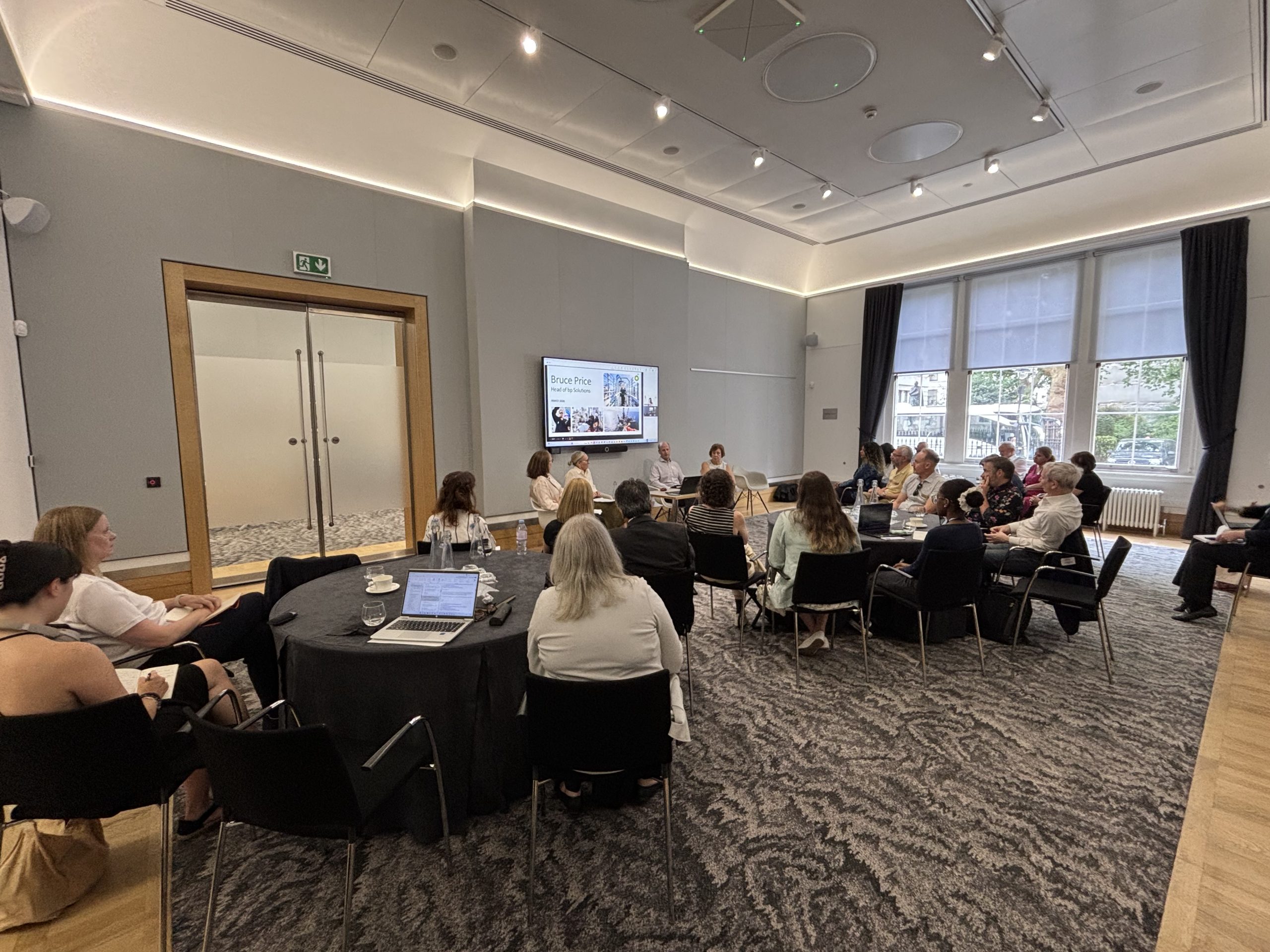
The advanced INWED First Friday Press Club, held on May 29 at the Royal Academy of Engineering in London, provided editors from the UK’s engineering and industrial media with an opportunity to hear the latest thinking about diversity, inclusion, and equity from engineering leaders. The objective was to understand more about this year’s theme of Engineering Intelligence, with three big questions forming the core of the panel discussion:
- Where are we now with diversity and how far have we come in the 50 years since the Academy was founded?
- How can organisations create a culture of diversity?
- And how can emerging technology help?
Meet the panel:
Chairing the panel was the Royal Academy of Engineering’s Head of Media and Engagement, Jane Sutton. She observed: “The academy was founded in 1976 with a cohort of 130 white men as Fellows. We’ve become much more diverse since then with a fellowship that now includes 13% women and we’re showing our diversity and broad spectrum of engineering skills through new photography we’ve commissioned of 50 fellows for our 50th year.”
Being an Academy Fellow, Isabel Coman is Director of Engineering and Asset Strategy at Transport for London (TfL) explained how TfL needs a diverse workforce to overcome the challenges of legacy infrastructure, heavy use, constrained funding and urgent need to adapt to climate change and customer expectations.
Coman said: “Diversity is really important in our environment, where understanding and relating to customers helps us to make big decisions. INWED’s theme of Engineering Intelligence means that the application of creativity while encouraging people in different technical disciplines to work together helps leaders to make good decisions.”
Bruce Price, Head of bp Solutions leads a team of 2000 operational experts, who operate and maintain assets and deliver capital projects.
He said “I learned early in my career that when people feel the ability to speak, challenge and disrupt the status quo, we get better engineering decisions. Working with a diverse team of people delivers better results. When different voices are heard, people learn faster from each other and solve more complex problems. That makes inclusion an integral part of engineering excellence, not an add-on.”
Katherine Critchley, President of the Women’s Engineering Society (WES), the organisation behind INWED, began her career as an engineering apprentice in the early 80s and has experience across the automotive and defence industries.
She said: “Since I started out, women have increased from a few percentage points to 16% of the engineering workforce today. The first INWED in 2014 celebrated women in engineering and encouraged more women to join the profession. Today INWED is global, with billions of online impressions and we’re planning to announce our Top 50 Women in Engineering Awards on this year’s INWED.
“We have set Engineering Intelligence as the theme for INWED 2026 to highlight that the key to success is not artificial intelligence (AI), but human intelligence, communication and good design.”
Katy Deacon, Vice President at the Institute of Engineering & Technology, brought the perspective that inclusion applies to much more than gender. As a VP and chair of the Equity, Diversity, and Inclusion board at the IET and a Royal Academy of Engineering visiting professor in inclusive engineering design, Deacon is a wheelchair user and champions inclusion for disabled people.
“Even though 24% of people in the UK have a disability, only 14% of the engineering workforce has disabilities. That’s a wakeup call. Disabled professionals face disability tax, where they need to spend more time, energy and money to advocate and get adjustments. If you can’t get out of your home, it’s hard to join the workforce and contribute to the diversity that the other panellists are championing.”
Where are we now with diversity and how far have we come in the 50 years since the Academy was founded?
Jane Sutton started the discussion: “Where are we now, how far have we come, and what challenges do we face?”
Bruce Price: “We’ve come a long way as EDI is no longer a side conversation. Our biggest focus today is on creating true psychological safety where anybody can contribute regardless of their background, gender or ethnicity, and we get a place where people can speak up and challenge the status quo. That’s particularly important in high-risk environments.”
Katherine Critchley: “When I first joined industry, diversity was considered a women’s problem, but nowadays it is about including everybody. When WES held its centenary in 2019, we set the goal of 30% at 2030 but we’re only at 16% today, which is still a long way off.
“We need to look at ways to bring women back into engineering as many take career breaks in their 30s and 40s to look after their families. We can’t just label one gender as having that responsibility. To overcome that, we want to get closer to parity with 30% of women in engineering. If they can’t bring their skills up to date after a career break or raising a family, we lose them forever.”
Katy Deacon confirmed that changing circumstances have a big impact on career paths and that proactive inclusion is vital: “I became severely disabled at 32 and was able to keep working as I had a brilliant boss who moved heaven and earth to make sure I could keep achieving.
“We need to make sure that we’re creating an environment where anybody can keep working because our lived experience can contribute to the work we’re doing. It’s about using the skills and knowledge to build better for everyone.”
Isabel Coman agreed: “We need to really think about what’s inclusive. Adding to Katy’s point, it’s often seen as an effort to do something extra and make an exception for individuals. We need to focus on creating the right physical space and environment to enable all people to be at their best and connect to wider networks.”
How can organisations create a culture of diversity?
Jane Sutton set the scene by posing the question: “How do we move from aspiration to a culture where different voices work together and practically, how can organisations create diverse and accessible cultures?”
Bruce Price: “it’s really important that everybody in the organisation can see people like them as role models. Then they can see how they cancan make impactful decisions, do meaningful work, and deliver great results. And it must be an inclusive environment where people can speak up and be themselves.
“Allyship is so important, and you have to make it a deliberate thing. It’s easy to get lost with unconscious bias. Rather than going with good intentions, you have to go out of your way and create time to sponsor talent and be vocal. It’s how you spend your time as a leader and create a space for sponsorship.”
Katy agreed: “If you can see yourself represented, you can see yourself in that position. So, for other wheelchair users, it’s really important to see videos and photos of me so that they can see themselves doing the same things. I’m part of the IET’s network of disabled people, which is a group of people who share similar issues.”
Katherine agreed that recognition starts with visibility: “The Top 50 Women in Engineering Awards (WE50) is great for visibility, we also run wider WES awards programmes that include awards for men as allies. We also raise awareness of women throughout their careers in different industries through our She’s An Engineer campaign. That’s important as engineering is vast, ranging from chocolate-making machines to tanks, and we’ve got to show the public what an engineer looks like as there are a lot of misconceptions.”
Isabel Coman: “INWED is a really important day for visibility at TfL as we showcase the work that our talented women engineers do. Like Katy said, it’s about showing their impact and what outcomes and influence they’re having right across our business.
“Direct action is also important. For example, the Institution of Civil Engineers provides sponsors to help women towards fellowship. As a result, this has doubled the number of women fellows in four years. It helps to shape the perception of people who don’t feel represented or who can’t see themselves in engineering.”
How can emerging technology help?
Jane Sutton moved the focus of the conversation to technology: “What about emerging technologies including AI and digital technologies? How can this help with diversity and removing barriers? Is it going to add new risks?
Katy Deacon: “The way that technology has developed has changed how engineers learn and collaborate. One engineer cannot solve every problem, you need a team and new technologies like AI will allow people to do things quicker and be more efficient and detailed.
“One example is a tool called BelongifAI that architects can use to identify areas in their plans where wheelchair users will struggle. As a result, they can design more accessible homes for the UK’s 1.2 million citizens with mobility impairments. Rather than fearing new technology, it’s about embracing technology.
“The IET has published a disability in engineering and technology report that found that people with disability are often overlooked but they are best-informed in terms of how to be inclusive. We’re now creating toolkits for employers, HR teams and individuals with disabilities. The aim is to support the industry and build inclusivity.”
Isabel Coman highlighted that technology presents opportunity and risk: “From an inclusion point of view, TfL needs people who can move faster and change their thinking quicker. Technology will put more emphasis on needing diversity as we will need people to constantly scan the horizon for issues and challenge the rest of the team. We have a lot of people marketing AI solutions to us, but I think it’s most important to create communities that understand our objectives and how to apply technology intelligently.”
“One of our discussions is how to use drones and camera technology to assess our assets. It’s got potential for us to judge our assets more frequently and use a risk-based approach that moves away from time-based maintenance standards.”
Bruce Price added: “At their core, engineers are problem solvers who use data and scientific principles to assess trade-offs and risks and make good decisions. That doesn’t change – but what is changing is faster access to more data and less manual work. So emerging technology will be hugely transformational but I’m not going to predict where we’ll be in 10 years because it’s moving so fast.
“We’re looking for engineers who are inquisitive and want to solve problems. If we’re ordering a compressor package, engineers can use AI to get the standards, compare the reliability and make recommendations. It equips the engineers with new skills – but they have to learn fast.”
Katherine Critchley is wary of putting too much trust in technology: “You’ve got to watch for drift in the data and be able to interpret the data, but the main thing is that engineers need is good technical skills and the ability to work as a team.
“Looking back at the start of my career, we had designers at drawing boards. Today, they’re using computers, AI is just a tool to help them do it faster, be more competitive and get products out the door faster.”
Jane Sutton concluded: “Engineering intelligence is not defined just by technology but how people, systems, and decisions work together in practice. By setting the theme of engineering intelligence, INWED 2026 is part of a bigger effort to help engineering professionals deliver better outcomes for diversity.”